The Pathways App
Here's a first look at the app interface.
Open the app
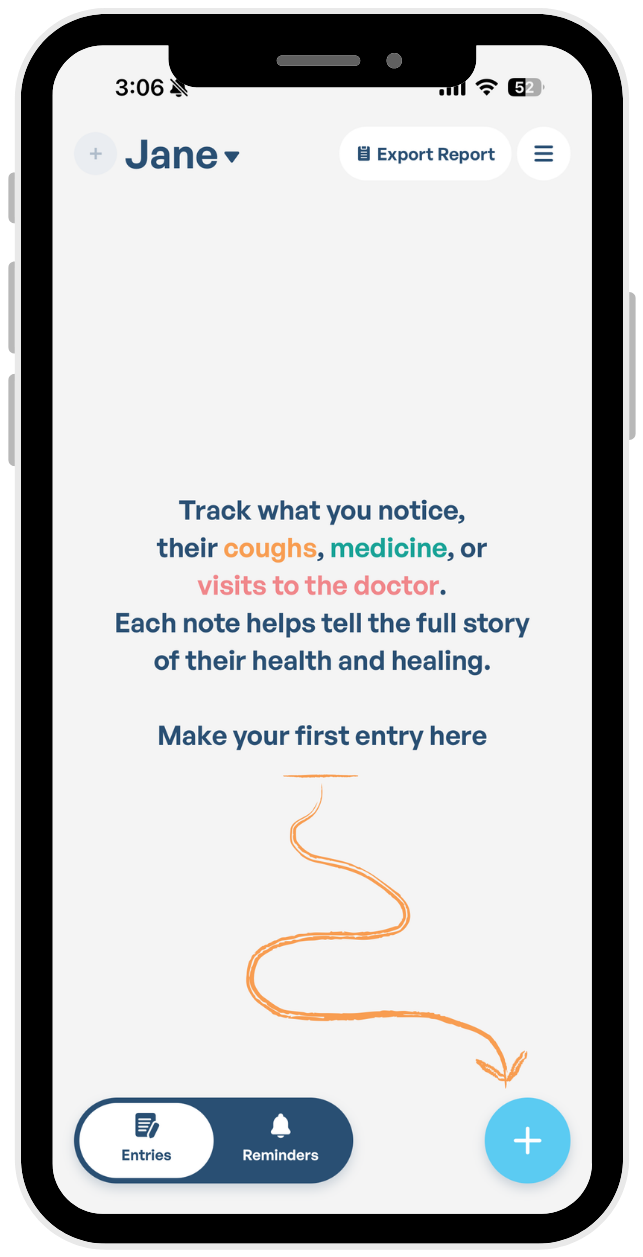
Quick to start logging
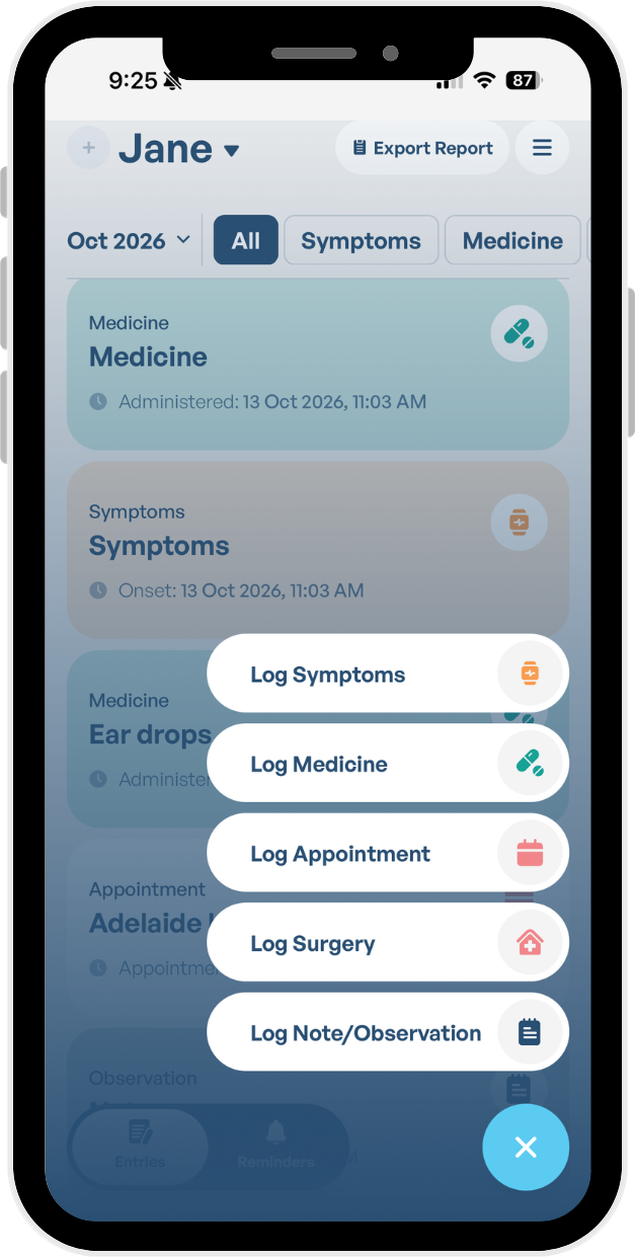
Choose what to log
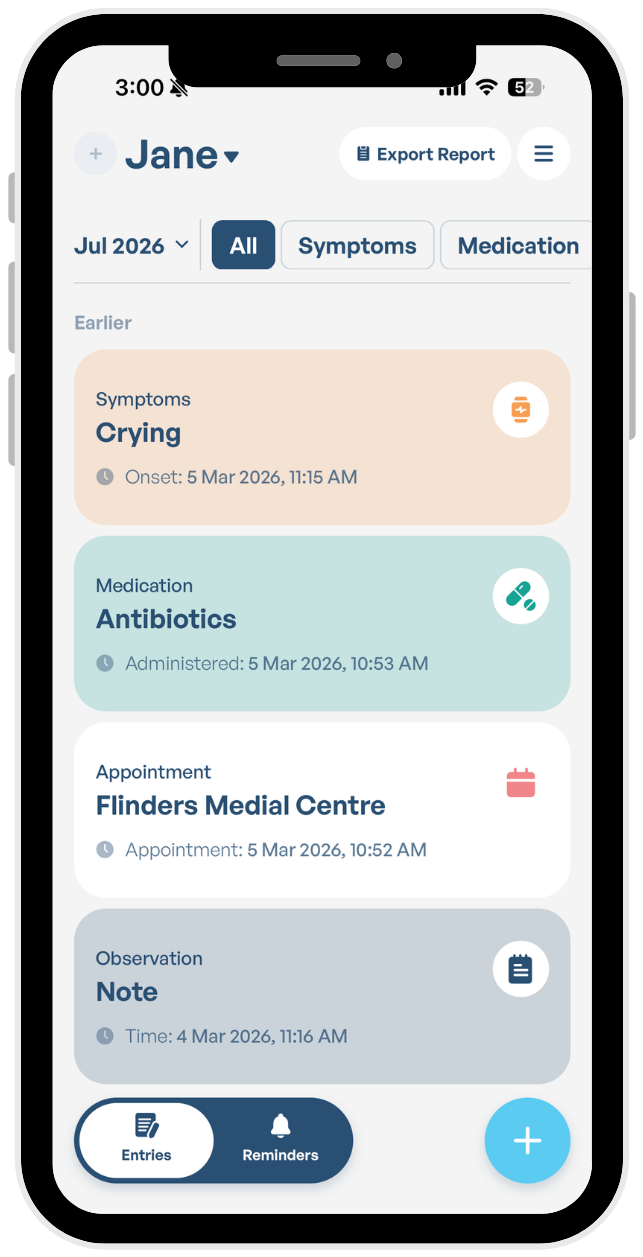
See your child's timeline
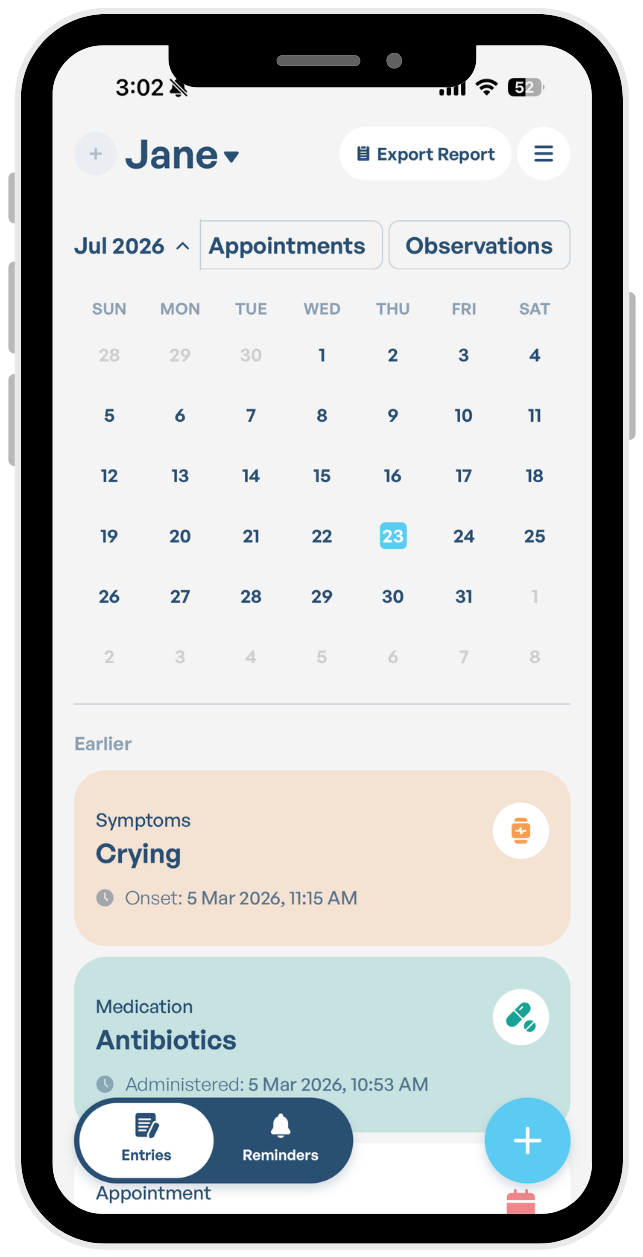
View by calendar
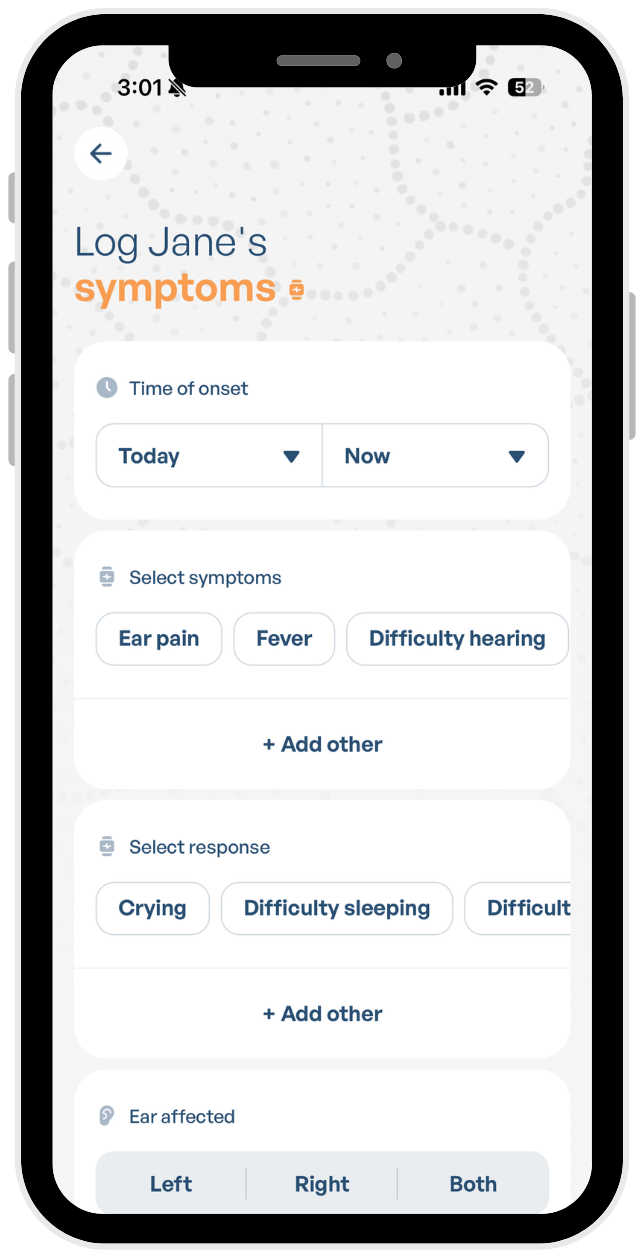
Record symptoms
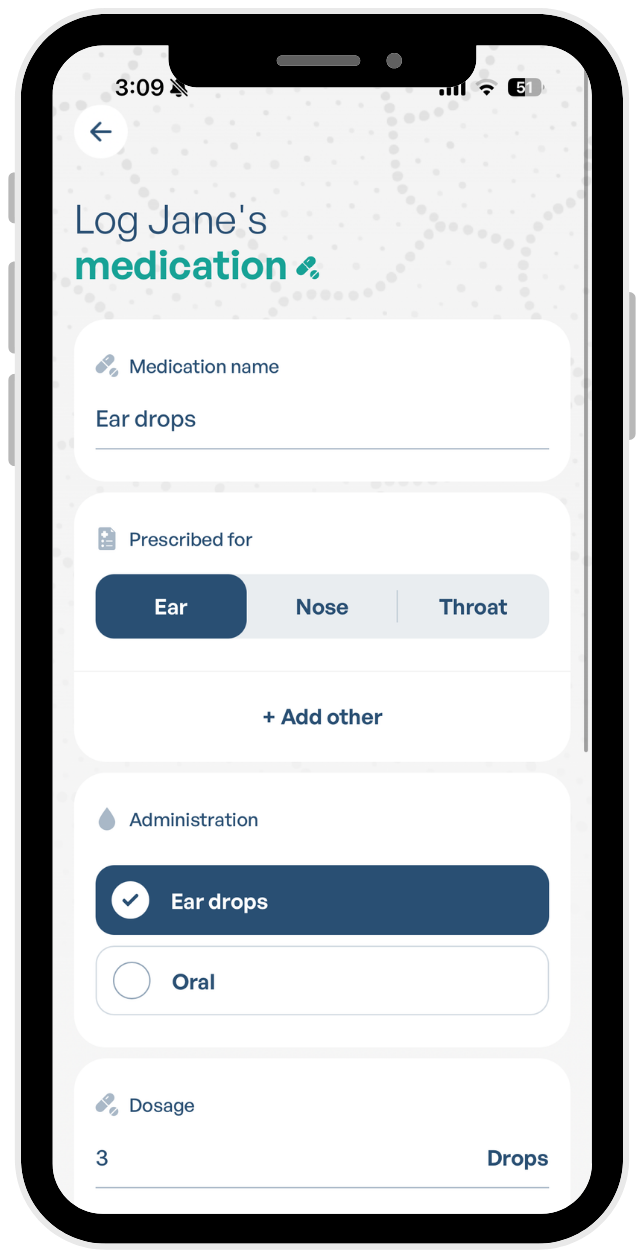
Log medicines
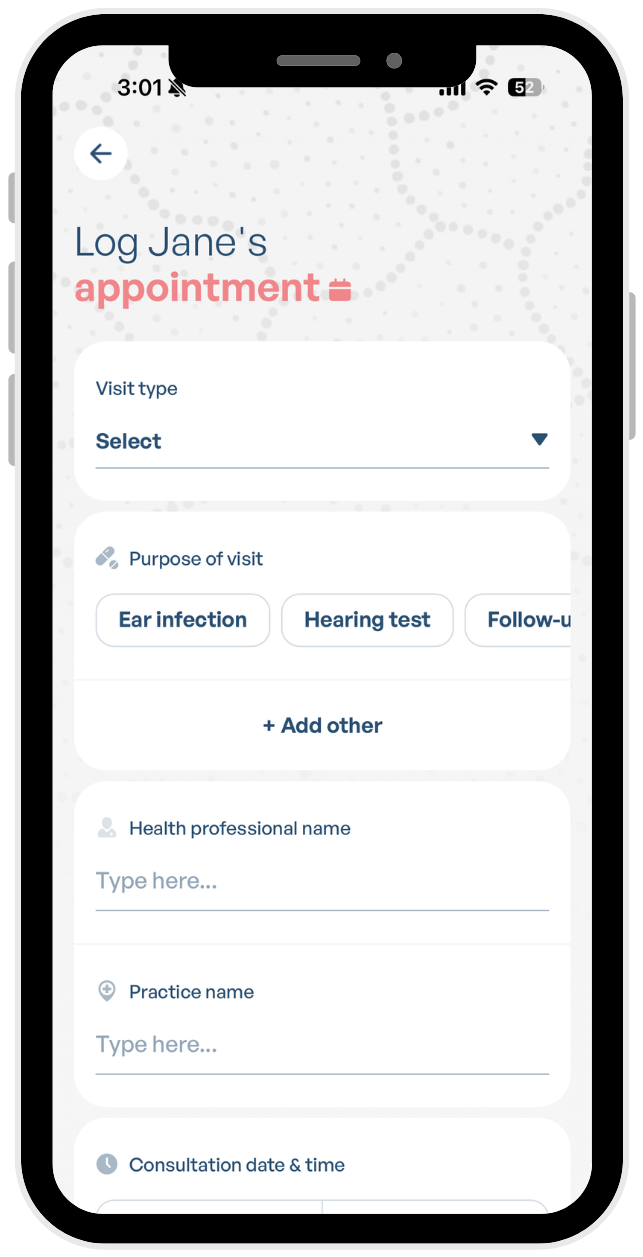
Track appointments
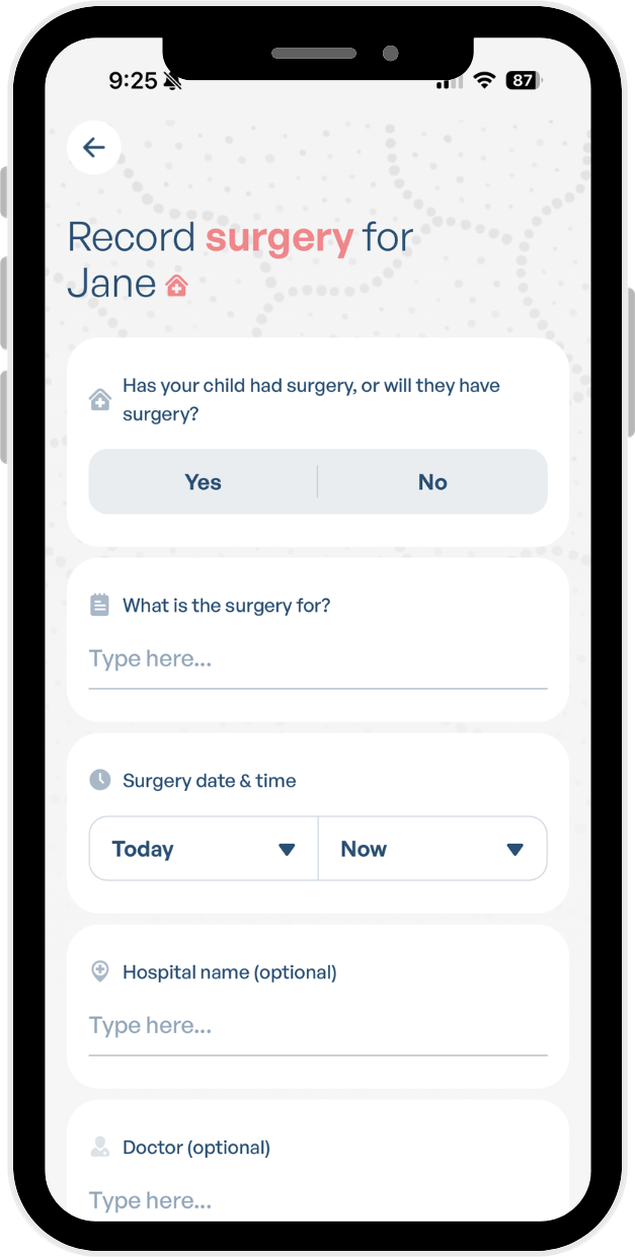
Record surgeries
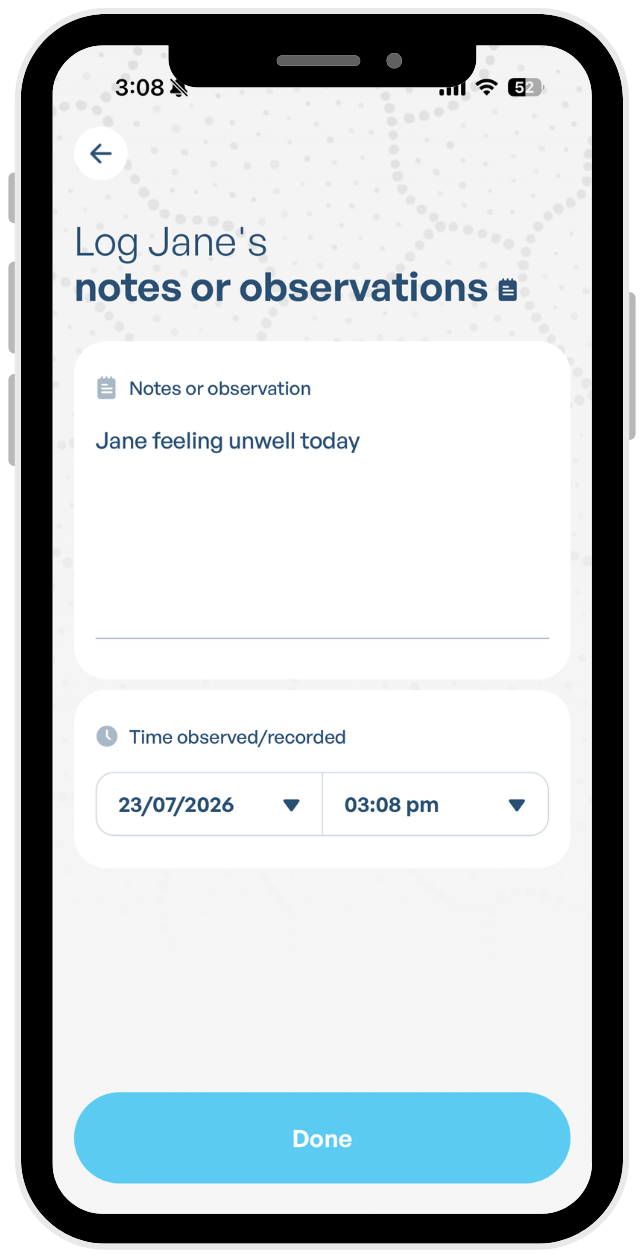
Add notes & observations
Families are the one constant in their child's ear health journey
As children move between different health care providers, families are the ones who hold the most complete understanding of their child's journey. Pathways was co-designed with families to help support this coordination role, and this pilot aims to understand how well it works in real-world settings.
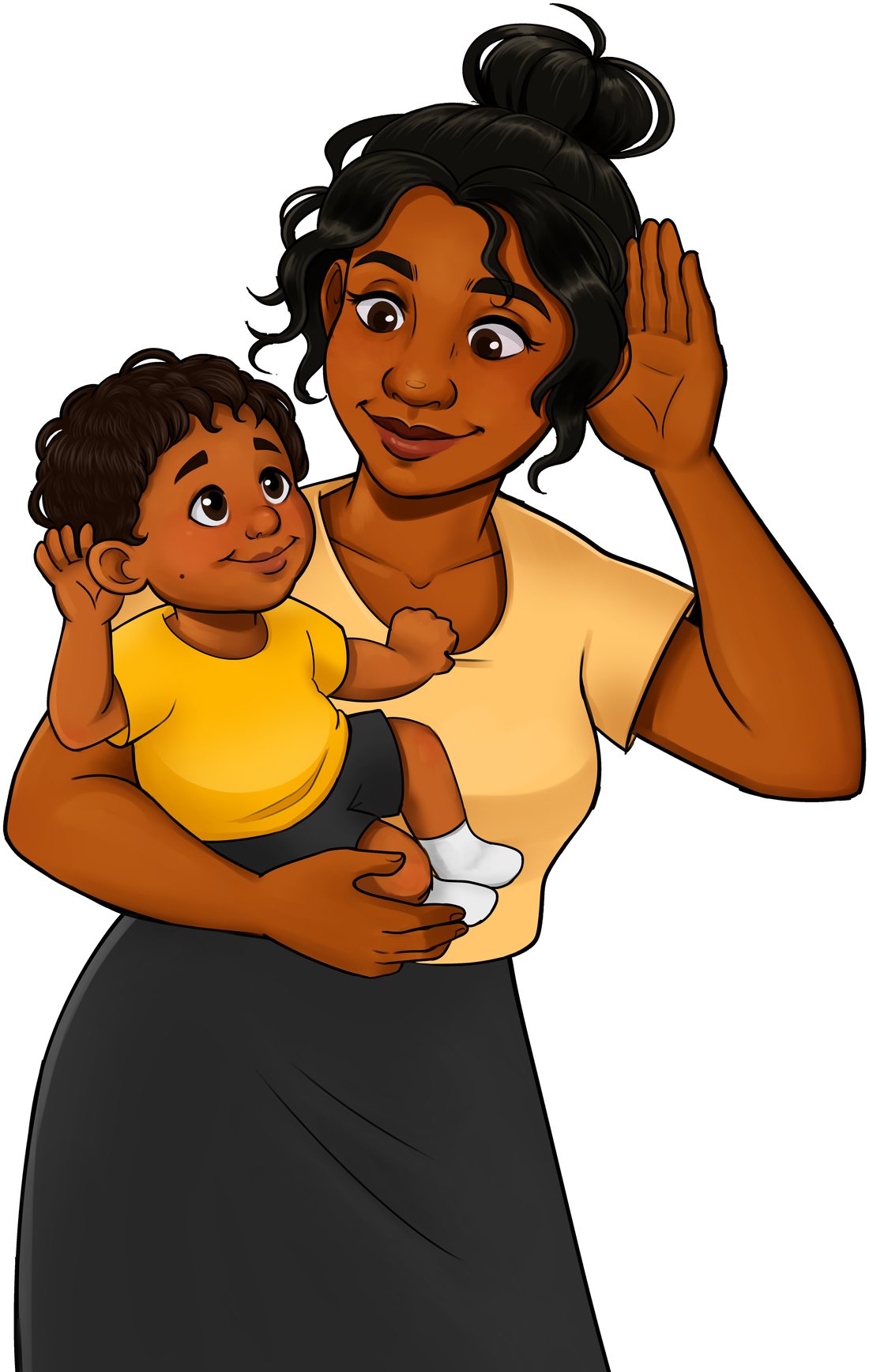


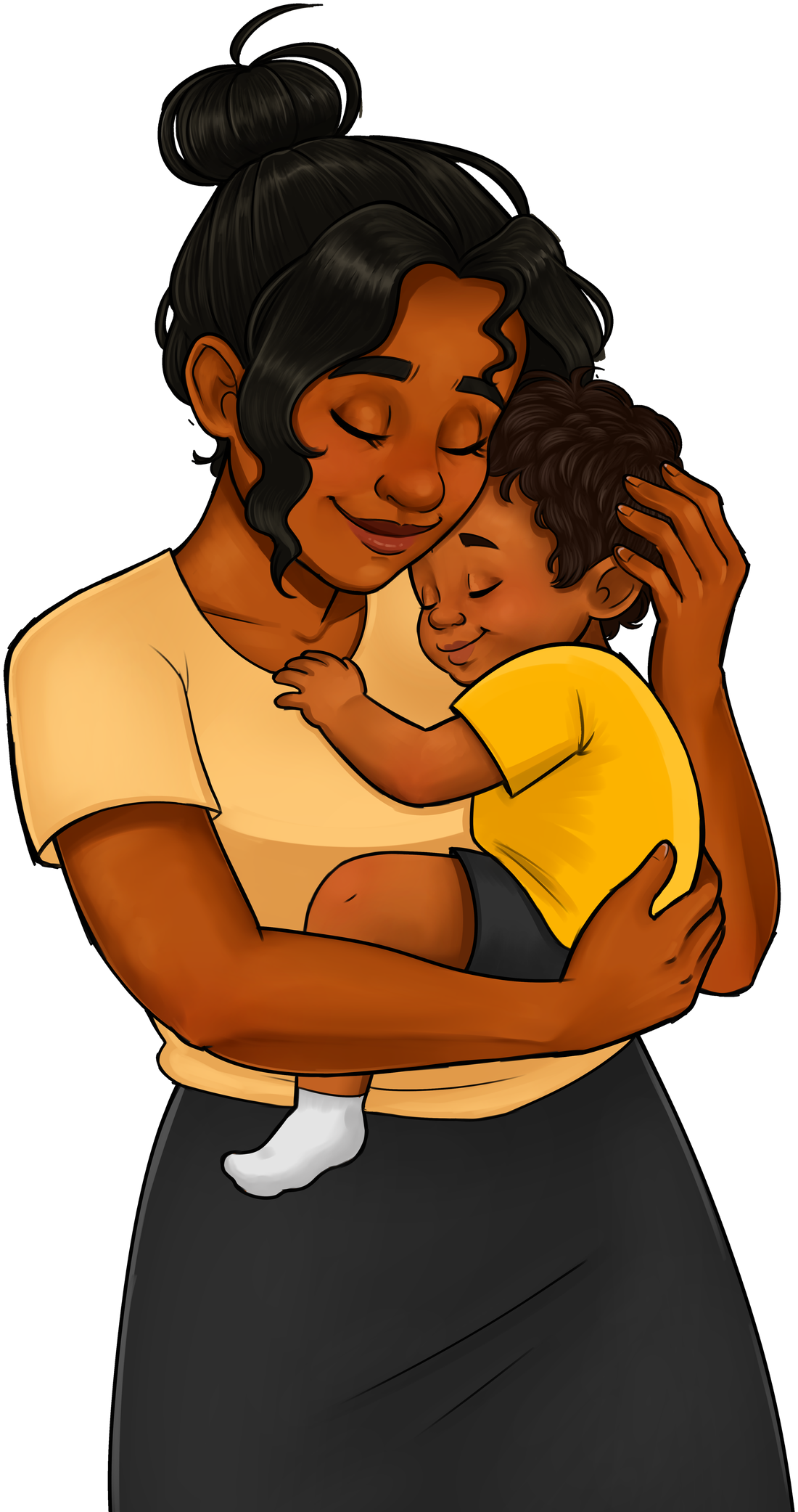
Co-designed with communities, built for families
Pathways was developed by Flinders University in partnership with and for Aboriginal and Torres Strait Islander families in Far West South Australia. It was built from the ground up with community — designed to fit the way families actually live, and to help them feel more in control of their child's ear health, day-to-day and at appointments.
The pilot study now underway is evaluating how well the app works in real-world use — whether it's easy to live with, and whether it helps families stay on top of their child's ear health over time.


Private by default
Everything you log stays in the app. You choose if and when to share it with your child's health team.
Works offline
Once downloaded, no internet needed. Your records are there even in areas with no signal.
Free, always
Free to download and free to use — no subscriptions, no hidden costs, no ads.
Find your way around


Acknowledgement of Country
We acknowledge the Traditional Owners and Custodians of the lands and waters, where this work was undertaken, are the Kokatha, Mirning, Maralinga Tjarutja, and Wirangu Peoples. We acknowledge and thank the Elders of the Far West Country and recognise their strength and leadership of the communities as they continue to care for Country.
We acknowledge the Traditional Owners and Custodians of the lands and waters where the Pathways team live and work are the Kaurna People. We honour their enduring connection to Country, culture, community and knowledge, and pay our respects to Kaurna Elders past and present.
We recognise that sovereignty was never ceded. This always was, and always will be, Aboriginal Land.
Built with families, for families
Ear disease, including middle ear infections (otitis media), is one of the most common health conditions affecting Aboriginal and Torres Strait Islander children. Keeping on top of it means remembering symptoms, medications and visits across many appointments over months or years.
Like your own personal notebook. Everything you log stays private in the app — nothing is sent to hospitals or clinics automatically. You choose if and when to share it.
Works anywhere, once downloaded. After the initial download, no internet is needed to log entries — even in areas with no signal.
Completely free. Pathways is free to download and free to use — no subscriptions, no hidden costs, no ads.
Up and running in three steps
Download & create your account
Download the app for free from the Apple App Store (iPhone) or Google Play (Android), available anywhere in Australia, then create your account with your details. Takes less than a minute to get started.
Add your child's profile
Set up a profile for your child, including their ear health history. Add as many children as you need — each gets their own record.
Log as you go
Whenever something happens — ear pain, a new medication, a clinic visit — tap to add a quick entry. Everything is saved, ready for your next appointment.
Free to download on iPhone and Android.
Acknowledgement of Country
We acknowledge the Traditional Owners and Custodians of the lands and waters, where this work was undertaken, are the Kokatha, Mirning, Maralinga Tjarutja, and Wirangu Peoples. We acknowledge and thank the Elders of the Far West Country and recognise their strength and leadership of the communities as they continue to care for Country.
We acknowledge the Traditional Owners and Custodians of the lands and waters where the Pathways team live and work are the Kaurna People. We honour their enduring connection to Country, culture, community and knowledge, and pay our respects to Kaurna Elders past and present.
We recognise that sovereignty was never ceded. This always was, and always will be, Aboriginal Land.
Using the app and joining the research study are completely separate. You can download and use the Pathways App for free without participating in any research — now or ever.
A pilot study led by Flinders University
This research explores how the Pathways App can support Aboriginal and Torres Strait Islander families in managing their children's ear health — whether it's useful, easy to use and acceptable to families, and where it could be better.
Families use the app for at least 3 months. The study involves around 20–30 families in Far West South Australia, including Ceduna, Yalata, Oak Valley and surrounding areas. It is conducted in partnership with Far West Community Partnerships (FWCP) and an Aboriginal Advisory Group.

Far West Community Partnerships
Far West Community Partnerships (FWCP) is our community partner for the pilot. An Aboriginal Community Engagement Officer from FWCP, based in Ceduna, leads recruitment, app onboarding and surveys with families in Far West South Australia. Yarning interviews are conducted by the Flinders University research team.
What's involved
Here's what you need to know before deciding whether to take part.
Who can participate?
Parents and primary caregivers of Aboriginal and/or Torres Strait Islander children aged 0–8 with a current or past history of ear disease or ear-related hearing loss, living in or accessing services in Far West SA, are eligible to take part. Participants need access to a compatible smartphone (iPhone or Android), either their own or a family member's.
What does taking part involve?
Participants use the app for at least 3 months, as much or as little as suits them, then complete a short survey about their experience (about 15–20 minutes). Families are also invited to take part in an optional yarning interview — a friendly chat with a researcher (about 40 minutes).
In recognition of their time, participants receive a $25 gift voucher after four weeks of using the app and a further $25 voucher when they complete the survey. Those who take part in a yarning interview receive an additional $50 voucher.
Ethics & your rights
This study has been approved by the Aboriginal Health Research Ethics Committee (#04-26-1244) and the Flinders University Human Research Ethics Committee (Project ID 9922). Participation is completely voluntary — you can withdraw at any time without it affecting your use of the app or access to any services.
Funding
Funded by the National Health and Medical Research Council (NHMRC Grant GNT2015793). The study is conducted in partnership with Far West Community Partnerships and an Aboriginal Advisory Group.
Interested in the study?
If you'd like to know more about the study or about taking part, get in touch with the research team directly. We're happy to talk everything through before you decide anything.
- Email: pathways@flinders.edu.au
- Mail: Pathways App Team, Flinders University, Sturt Road, Bedford Park SA 5042
Acknowledgement of Country
We acknowledge the Traditional Owners and Custodians of the lands and waters, where this work was undertaken, are the Kokatha, Mirning, Maralinga Tjarutja, and Wirangu Peoples. We acknowledge and thank the Elders of the Far West Country and recognise their strength and leadership of the communities as they continue to care for Country.
We acknowledge the Traditional Owners and Custodians of the lands and waters where the Pathways team live and work are the Kaurna People. We honour their enduring connection to Country, culture, community and knowledge, and pay our respects to Kaurna Elders past and present.
We recognise that sovereignty was never ceded. This always was, and always will be, Aboriginal Land.
Jordan Lovegrove
NgarrindjeriThe artwork by Ngarrindjeri artist Jordan Lovegrove encapsulates the essence of the Pathways Project, dedicated to improving early detection and treatment of ear infections among Aboriginal and Torres Strait Islander children.
At its heart lies a central meeting place symbolising the project's mission, surrounded by smaller meeting places representing the various health services and clinics that families connect with on their journey.
Footprints and pathways illustrate the journey families undertake for better ear health — the steps taken, the distances covered, and the connections made along the way.
White patterns signify the unity of diverse communities coming together, while coloured regions denote the project's reach across different areas and Country.
Through its imagery, the artwork highlights the challenges families face in accessing ear health care, and the collaborative efforts of working with families and staff together — across clinics, Aboriginal Medical Services and hospitals — to find a better way to coordinate this journey.
Emily Ferry
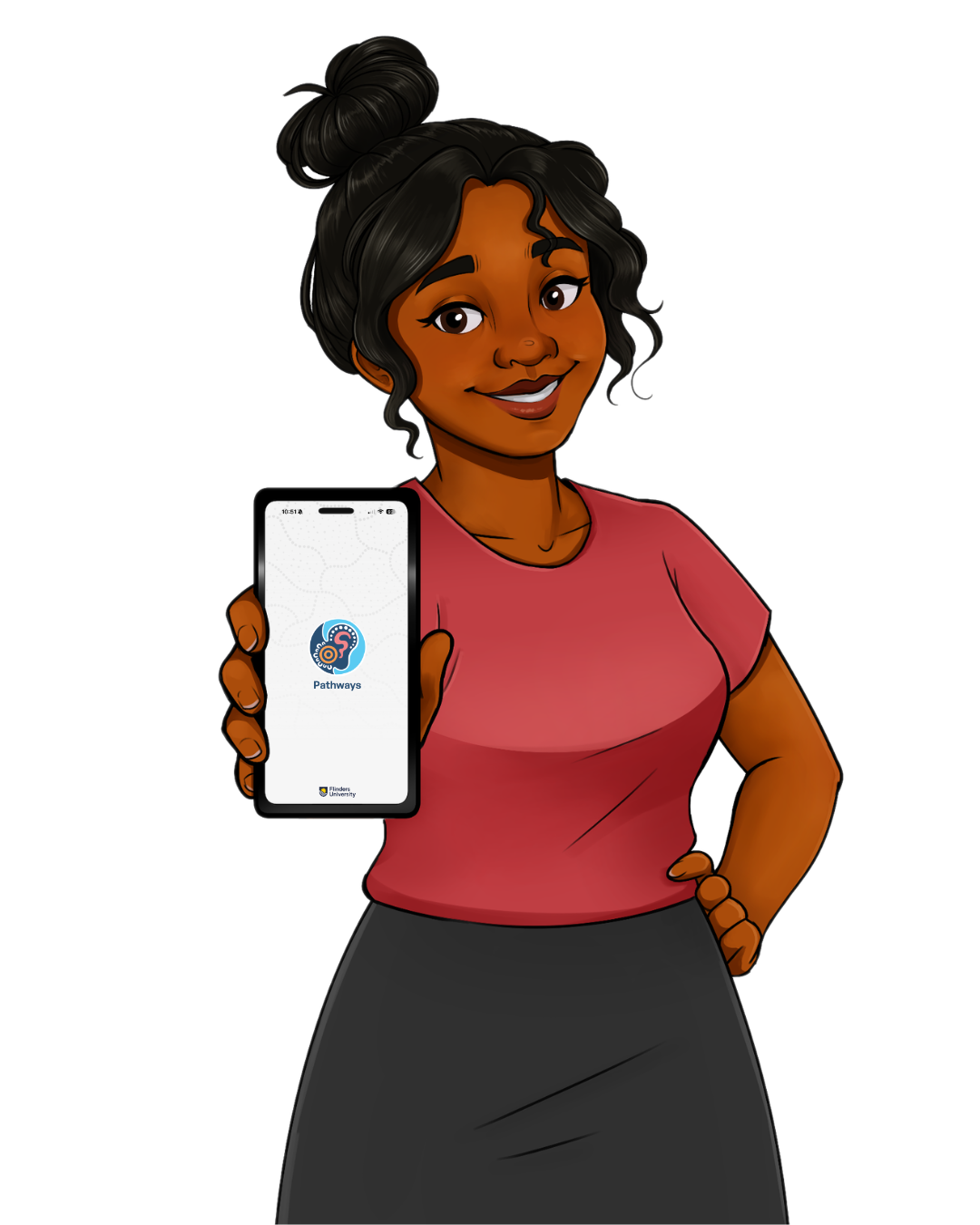
DunghuttiEmily Ferry is a Dunghutti artist born and living on Kaurna Country. A recent graduate of Flinders University, she is only at the beginning of her career. Emily especially enjoys collaborating with others and creating art that brings their ideas to life — and hopefully a smile to their face.
Acknowledgement of Country
We acknowledge the Traditional Owners and Custodians of the lands and waters, where this work was undertaken, are the Kokatha, Mirning, Maralinga Tjarutja, and Wirangu Peoples. We acknowledge and thank the Elders of the Far West Country and recognise their strength and leadership of the communities as they continue to care for Country.
We acknowledge the Traditional Owners and Custodians of the lands and waters where the Pathways team live and work are the Kaurna People. We honour their enduring connection to Country, culture, community and knowledge, and pay our respects to Kaurna Elders past and present.
We recognise that sovereignty was never ceded. This always was, and always will be, Aboriginal Land.
Key documents & links
Everything you need in one place. These are the approved versions (dated 7 October 2026) — please use only these.
Before you start
The essentials to know before working through the steps with families.
Ethics approval
The pilot is approved by the Aboriginal Health Research Ethics Committee (AHREC Protocol #04-26-1244, valid 8 October 2026 to 31 December 2027) and the Flinders University Human Research Ethics Committee (Project ID 9922).
Please use only the approved documents on this page and follow the steps as written. If something needs to be done differently, check with the Flinders team first, because changes need ethics approval.
Vouchers for families
Prezzee electronic vouchers. Each time, ask the family which merchant they would like (no alcohol or tobacco merchants) and where to send it, then update the tracker so Flinders can send it.
A family who withdraws before four weeks does not receive the first voucher.
Who to contact at Flinders
Recruitment
Steps 1 and 2 — find interested families and give them the information.
Spread the Word & Gather EOIs
Let eligible families know about the study and find out who is interested.
- Start with Phase 1 families — around 22 eligible families from the earlier Pathways work. The two parents on the Aboriginal Advisory Group are not approached.
- Then reach other families through community visits, word of mouth and service networks. Flyers can go up in community venues and health services, with that organisation's permission first.
- Introduce the study using the Verbal Recruitment Guide. It is a guide, not a script — say it in your own way.
- Check the family is eligible (see the list below).
- If they are interested, go to Step 2. Some families will instead scan the flyer QR code and send in an EOI themselves — Flinders will let you know when one arrives so you can follow up.
- Primary caregiver of an Aboriginal and/or Torres Strait Islander child aged 0–8
- The child has a current or past history of ear disease (otitis media) or ear-related hearing loss
- Lives in, or accesses services in, Far West South Australia
- Has access to a compatible smartphone (iPhone or Android) — their own or a family member's
- Willing and able to give informed consent
Share the PISC
Give the family the full information about the study so they can decide in their own time.
- Give the family a copy of the PISC (Participant Information Sheet and Consent Form) to keep.
- Offer to go through it with them and answer any questions.
- Give them time. They can take it home, talk it over with others, and come back to you. There is no rush.
- When they are ready to go ahead, go to Step 3.
- Using the Pathways App for at least 3 months, as much or as little as suits them
- A $25 voucher after four weeks of using the app
- A short survey with you at the end (about 15–20 minutes), and a further $25 voucher
- An invitation to an optional yarning interview with the Flinders team (about 40 minutes), with an additional $50 voucher
- It is completely voluntary — they can stop at any time and it will not affect their care or access to services
Consent & Onboarding
Steps 3 and 4 — record consent and set the family up on the app.
Informed Consent
Make sure the family understands the study, then record their written consent.
- Read through the PISC together and explain it in plain language.
- Check their questions have been answered before anything is signed.
- The family signs the consent form at the back of the PISC, and fills in their phone number and email. These are used to arrange the survey, the yarn invitation and the vouchers.
- Go through the three optional tick-boxes: future research use of their de-identified app usage data, being contacted about future research, and receiving a summary of results. They can say yes to any, all or none.
- Sign the researcher section of the form yourself.
- Give the family their copies — the signed consent form, the information sheet and the Support Services flyer.
- Scan the signed form and save it to the study folder.
App Onboarding
Same day as consent if that suits, one-on-one or in a small groupGet the family set up on the app and comfortable using it. They can fill in the rest in their own time.
- Sort out the phone — their own, or a family member's.
- Download the app from the Apple App Store (iPhone) or Google Play (Android).
- Explain the app's Terms and Conditions and Privacy Policy in plain language before they accept them. This is the same as any app, and separate from their consent to the research.
- Help them register — the parent or caregiver's name and, for each child, their name, date of birth, postcode and Aboriginal and/or Torres Strait Islander status. More children can be added later.
- Get the family's participant ID. Every family in the study has a participant ID (for example P001), which links their app use to the study without using their name. Phone the Chief Investigator, A/Prof Jacqueline Stephens, on (08) 8201 3972 and she will tell you the family's ID.
- Enter the participant ID in the app as a note. The app has no separate field for the ID, so add a new note and type the ID in as the family's first note. Do not write the ID down or keep it anywhere else, including the tracker. If you ever need it again, phone again.
- Go through the optional research question in the app — whether their de-identified app usage data can be used in future research. They can say yes or no, and change their answer any time in the app settings. It does not affect taking part in the pilot.
- Show them around — the symptom diary, medication log and appointment log (with optional reminders), and the Resources section.
Pilot Period
Step 5 — families use the app for at least three months.
Pilot Period
At least 3 months from the onboarding dateFamilies use the app as much or as little as works for them. There are no usage requirements — your role is to stay in touch and support them.
- At four weeks, arrange the first voucher ($25). Ask which Prezzee merchant the family would like, confirm the email or mobile to send it to, and update the tracker so Flinders can send it.
- Check in at least once. The four-week mark is a natural time, but use your judgement on what suits the family.
- Help with any app problems where you can, or put the family in touch with the Flinders team at pathways@flinders.edu.au.
- At three months, go to Step 6 to do the survey — unless the family would like more time (see below).
After the Pilot
Steps 6 and 7 — the survey, then an optional yarn.
uMARS Survey
At the end of each family's pilot period (three months or more after onboarding)Complete the survey together, about 15–20 minutes, face-to-face or by phone. You read the questions aloud and enter the answers — the family does not need to touch the device.
- Arrange a time that suits the family, in person or by phone.
- Open the uMARS Survey link. If it asks for the family's participant ID, phone the Chief Investigator on (08) 8201 3972.
- Read each question aloud and enter the answers. It starts with a few questions about the children they use the app for (how many, their ages, and their Aboriginal and/or Torres Strait Islander status), then 25 questions about the app. They can skip any question.
- Arrange the second voucher ($25). Ask which merchant they would like and update the tracker so Flinders can send it.
- Invite the family to a yarn. Ask whether they would like to take part in an optional yarning interview with the Flinders research team (about 40 minutes, with an additional $50 voucher). It is completely up to them. If yes, go to Step 7.
Yarning Interview
After the survey, for families who say yesYou collect the family's consent and connect them with Flinders. The Flinders research team then runs the yarn — about 40 minutes, face-to-face where possible, or by video call or phone, and audio recorded with the family's permission.
- Complete the yarning consent form (at the back of the PISC) with the family. Go through it together, have them sign it, and sign the researcher section yourself.
- Scan the signed form and save it to the study folder.
- Let the Flinders team know the family has consented, and help them find a time and place that suits.
- Flinders runs the yarn. The researcher confirms consent again out loud before recording starts. Afterwards the family receives the third voucher ($50) — ask which merchant they would like.
- Arrange the transcript review. Ask the family how they would like to receive their written transcript (for example by email or as a printed copy) and let Flinders know. Flinders provides the transcript and makes any changes the family asks for.
If a family member becomes upset or distressed
What to do, and who to call, at any point in the study.
Talking about a child's ear health can bring up strong feelings. If someone tells you they are distressed, or becomes upset, tearful, withdrawn or silent, follow the Distress Protocol:
- Stop what you are doing straight away. Acknowledge how they are feeling, calmly and without judgement.
- Check how they are: How are you feeling right now? Do you feel able to continue? Do you feel safe? Is there someone I can contact for you?
- Reassure them that stopping will not affect their access to services or their relationship with FWCP or the research team.
- If they feel able to carry on, you can resume. If not, end the session. Ask if they would like you to contact a family member or support person and, with their consent, contact the local Aboriginal health service or another support service.
- Follow up with a courtesy check-in if they are happy for you to, and make sure they have your contact details.
- Always tell the Chief Investigator as soon as practicable, on (08) 8201 3972, and note what happened.
This is not the Privacy Policy. Flinders University has a broader Privacy Policy that applies to the whole organisation, which you can read at flinders.edu.au/privacy-policy. This Collection Statement provides information specific to the Pathways App and the types of information we collect through the app.
1. Who We Are
The Pathways App is developed by Flinders University and is designed to support Aboriginal and Torres Strait Islander families in tracking and managing children's ear health. The app was co-designed with and for Aboriginal and Torres Strait Islander families and communities to ensure it meets your needs and respects your cultural values.
- Email: pathways@flinders.edu.au
- Mail: Pathways App Team, Flinders University, Sturt Road, Bedford Park SA 5042 or GPO Box 2100, Adelaide SA 5001
2. Information We Collect
We collect personal and health information to enable you to track your child's ear health. Some of the information we collect is classified as "sensitive information" under the Privacy Act 1988, which has additional protections. This includes:
- Health information about your child (such as symptoms, medications, appointments, surgeries, and ear health observations)
- Aboriginal and/or Torres Strait Islander status (racial or ethnic origin)
2.1 Parent/Caregiver Information (During Sign-Up)
- First name and last name
- Date of birth
- Gender
2.2 Child Profile Information
- Child's first name and last name
- Child's date of birth
- Child's gender
- Aboriginal and/or Torres Strait Islander status (self-identified by you)
- Postcode
2.3 Health Tracking Information
When you use the app to track your child's health, you may enter:
Notes/Observations
- Any notes or observations you type
- Time and date of the observation
Appointments
- Visit type (in-person or phone)
- Purpose of visit (ear infection, hearing test, follow-up check, or other)
- Health professional name
- Practice name
- Consultation date and time
- Any appointment notes you type
- Reminder option for the appointment
Surgeries
- Whether your child has had, or will have, surgery
- What the surgery is for
- Surgery date and time
- Hospital name (optional)
- Doctor name (optional)
Medications
- Medication name
- What it was prescribed for (ear, nose, throat, or other)
- Administration method (ear drops, oral, topical, nasal)
- Dosage amount
- Frequency of dose
- How many days it should be taken
- First time administered
- Reminders for doses
Symptoms
- Time of onset of symptoms
- Selected symptoms (ear pain, fever, difficulty hearing, headache, dizziness, nausea, vomiting, swelling, itchiness, redness, hoarse voice, or other)
- Response to symptoms (crying, difficulty sleeping, difficulty eating/swallowing, improvement, no change/neutral, or decline)
- Severity of symptoms (mild, moderate, or severe)
- What medication the child took
- Any notes or observations you type
2.4 How We Collect Your Information
We collect your information:
- Directly from you when you create your account, set up child profiles, and use the app to enter health tracking information
- Automatically through the app when you log in, save information, or use app features (such as timestamps when you log observations)
We do not collect your information from third parties, healthcare providers, or other external sources.
2.5 Whether Collection is Required or Authorised by Law
Collection of your information is not required by law. Your use of the Pathways App and your decision to provide information is entirely voluntary. You choose what information to enter and share through the app.
3. The Purposes of Collection
We collect this information to enable the Pathways App to function:
- Health tracking information: To enable you to use the app's features — to track appointments, surgeries, medications, symptoms, and observations about your child's ear health. This information is stored for your personal use and management.
- Profile information (names, dates of birth, gender): To create and manage profiles for you and your child(ren) within the app.
- Aboriginal and Torres Strait Islander status and postcode: You decide whether to provide this information. If provided, this information can be used to help us understand who is using the app. It is not required for the app to function.
- For future research (only if you consent): See Section 5 below. Research use is completely optional and requires your separate consent.
- Other purposes: To respond to support requests or enquiries, and to comply with legal obligations.
4. The Consequences if Personal Information is Not Collected
If you choose not to provide certain information:
- Basic account and profile information: Without this information (such as names and dates of birth), you will not be able to create an account or use the app.
- Health tracking information: You can still use the app, but it will be less useful for tracking your child's ear health. The more information you enter, the more helpful the app will be as a tracking tool.
- Aboriginal and Torres Strait Islander status and postcode: This information is optional and not providing it will not affect your ability to use the app.
- Research consent: You do not have to consent to research to use the app. If you choose not to consent, your app will function exactly the same.
5. Research — Optional Participation
You do not have to participate in research to use the Pathways App. Research participation is completely optional and will not affect the services or features available to you.
If you choose not to participate in research, we will not use your information for research purposes. Your information will only be used to enable the app's functionality (as described in Section 3).
If you choose to participate in research, during sign-up or at any time in your app settings, you can choose to allow us to use your de-identified information for research. This research helps identify where the health system needs to improve to better serve Aboriginal and Torres Strait Islander children.
If you consent to research, we may:
- Use your de-identified, aggregated information to understand patterns in ear health care and identify gaps in services
- Include de-identified, aggregated findings in research publications, reports, and presentations to inform health services and policymakers
- Share your de-identified information with approved research partners who follow strict privacy and ethical standards
Separately, if you also consent to being contacted for future research, you agree that we can use your contact details to contact you about opportunities to participate in specific studies. You can say no to any individual study without affecting your use of the app.
6. Usual Disclosures of Personal Information
We do not share your personally identifiable information with third parties for advertising or marketing purposes.
- Analytics: We analyse aggregated, de-identified data internally (by the Flinders research team) to improve the app. No personally identifiable information is shared externally for analytics purposes.
- Cloud Storage Providers: We use a third party provider for secure data storage. These providers are bound by privacy agreements and do not have access to use your data for their own purposes.
- Required Disclosures: We may disclose your information without your consent only when required or authorised by Australian law, such as in response to a court order or to prevent serious threats to health or safety.
7. Overseas Disclosure
Your personal information is not disclosed to overseas recipients.
8. How We Store and Protect Your Data
Storage Location: Your information is stored on secure cloud servers in Australia.
Security Measures: We have implemented security measures to protect your data from unauthorised access, alteration, disclosure, or destruction, including:
- Encryption of data at rest and in transit
- Secure cloud infrastructure with access controls
- Restricted access to authorised personnel only
However, no method of data transmission over the internet is completely secure, and we cannot guarantee absolute security.
9. Data Retention
We retain your data for as long as you use the app and have an active account. You can request account deletion at any time by emailing pathways@flinders.edu.au. All your data will be permanently deleted from our systems within 30 days of your request.
If you stop using the app for an extended period without deleting your account, we may contact you to confirm whether you wish to retain your data or have it deleted.
10. Your Rights
Under the Privacy Act 1988, you have the following rights regarding your personal information:
- Access: You can view your information in the app at any time, or request a copy of all the data we hold about you by contacting us at pathways@flinders.edu.au.
- Correction: You can update most information directly in the app. If you cannot update something yourself or believe information is incorrect, please email us and we will correct it.
- Deletion: You can request that your account and data be deleted at any time by emailing pathways@flinders.edu.au.
- Withdraw Research Consent: If you previously consented to research, you can withdraw this consent at any time in the app settings or by contacting us. Withdrawing consent will not affect your ability to use the app.
- Control Reminders: You can choose whether to receive appointment and medication reminders and can turn them on or off at any time in the app settings.
11. Flinders University Privacy Policy
For more information about how Flinders University handles personal information across the organisation, please refer to the Flinders University Privacy Policy:
12. Cookies and Tracking Technologies
The Pathways App does not currently use cookies or other tracking technologies.
13. Age and Use
The Pathways App is intended for parents and caregivers to track their children's ear health. There is no specific age restriction for users. The app does not provide medical advice, diagnose disease, or function as a medical tool — it is designed for personal health tracking only.
14. Changes to This Collection Statement
We may update this Collection Statement from time to time. When we make changes, we will post the updated statement in the app and update the 'Effective Date' and 'Version' at the top. If we make significant changes, we will notify you through the app or by email.
15. Privacy Complaints
15.1 Complaint to Us
Please contact us first at pathways@flinders.edu.au. We will:
- Acknowledge your complaint within 7 days
- Investigate your concerns
- Respond to you within 30 days
15.2 Complaint to the OAIC
If you are not satisfied with our response, you can make a complaint to the Office of the Australian Information Commissioner (OAIC):
- Website: www.oaic.gov.au
- Phone: 1300 363 992
- Email: enquiries@oaic.gov.au
16. Contact Us
If you have questions about this Collection Statement or how we handle your information, please contact us:
- Email: pathways@flinders.edu.au
- Mail: Pathways App Team, Flinders University, Sturt Road, Bedford Park SA 5042 or GPO Box 2100, Adelaide SA 5001
Acknowledgement of Country
We acknowledge the Traditional Owners and Custodians of the lands and waters, where this work was undertaken, are the Kokatha, Mirning, Maralinga Tjarutja, and Wirangu Peoples. We acknowledge and thank the Elders of the Far West Country and recognise their strength and leadership of the communities as they continue to care for Country.
We acknowledge the Traditional Owners and Custodians of the lands and waters where the Pathways team live and work are the Kaurna People. We honour their enduring connection to Country, culture, community and knowledge, and pay our respects to Kaurna Elders past and present.
We recognise that sovereignty was never ceded. This always was, and always will be, Aboriginal Land.
1. User Consent
Please read these Terms of Use carefully before using the Pathways App. By using the Pathways App, you agree to these Terms. If you do not agree with any part of these Terms, you must not use the app.
2. Intended Use
In an emergency, call 000.
- Not a Substitute for Healthcare: This app does not replace professional medical care. If you have concerns about your child's health, please contact your healthcare provider.
- Self-Management Tool: The app is designed to help you track and monitor your child's ear health for your own reference. It does not automatically share information with healthcare providers.
- User Responsibility: You are responsible for seeking appropriate medical care for your child. The app is intended to support — not replace — professional healthcare guidance.
- Not for Clinical Use: This app is not intended for use by healthcare professionals for diagnosis or treatment decisions.
3. License to Use
Flinders University grants you a limited, non-exclusive, non-transferable licence to access and use the app for personal, non-commercial use, subject to these Terms.
4. User Obligations
You agree to:
- Use the app only for its intended purpose as a personal tracking tool for your child's ear health
- Not engage in any unauthorised access, use, or exploitation of the app, which without limiting any other Term, includes the following prohibited actions:
- licence, sublicence, sell, resell, rent, lease, transfer, assign, distribute or otherwise commercially exploit or make the app available to any third party
- use the app to process data on behalf of any third party
- modify, adapt, or attempt to gain unauthorised access to the app
- use the app to send unsolicited or unauthorised mail, spam, or other forms of duplicative or unsolicited communications
- use the app to store or transmit files, materials, data, text, audio, video, images or other content that infringes on any person's intellectual property rights
- attempt to decipher, decompile, reverse engineer or otherwise discover the source code of the app
- use the app to knowingly post, transmit, upload, link to, send or store any viruses, malware, or any other similar harmful software
- Not use the app in any way that violates Australian law
5. Limitations of Liability
Flinders University is not liable for any damages or losses arising from:
- Loss of data, including tracking records, notes, or observations you have entered into the app
- System downtime or outages
- Reliance on the app for medical decisions — users should always consult a healthcare professional for medical advice
- Technical errors, bugs, or compatibility issues with your device
In no circumstances will Flinders University have any liability for lost profits or loss of business or lost data, business interruption, loss of goodwill, or for any type of indirect, special, consequential, incidental, or punitive damages arising out of or related to the app or these Terms, even if informed of their possibility in advance.
The app may contain features designed to be integrated and/or configured with third party products, applications, services, software, networks, systems, directories, websites, databases and information which the app links to (Third Party Services). To use such features, you may be required to obtain access to such Third Party Services. By enabling any Third Party Services, you expressly permit Flinders University to disclose any information necessary to facilitate the use or enablement of such Third Party Services.
6. App Availability
We do not guarantee uninterrupted access to the app and may experience outages or maintenance periods. We are not responsible for any inability to access the app.
7. Modifications to the App or Terms
- Changes to the App: We reserve the right to modify or discontinue any feature of the app at any time, without notice.
- Changes to the Terms: We may update these Terms from time to time. Any updates will be communicated to you via the app or by email. Continued use of the app after changes are made constitutes acceptance of the updated Terms.
8. Intellectual Property
All content, designs, features, and software within the app are the property of Flinders University. You are prohibited from copying, modifying, or distributing the app or its components without explicit permission.
You retain ownership of all personal information and health data you enter into the app. You are free to export, share, or use your own data as you choose.
9. Termination
You may stop using the app at any time. We reserve the right to suspend or terminate your access to the app if you breach these Terms. Upon termination, you may request deletion of your data as outlined in our Privacy Policy.
10. Jurisdiction and Governing Law
This app is intended for users within Australia. These Terms are governed by the laws of South Australia. Any legal disputes arising from or related to these Terms or your use of the app will be subject to the jurisdiction of the courts in South Australia.
By using the app, you agree to comply with Australian laws, including the Privacy Act 1988.
11. Dispute Resolution
In the event of a dispute, we encourage you to contact us first to attempt to resolve the issue. If a resolution cannot be reached, the dispute will be governed by the laws of South Australia.
12. Severability
If any provision of these Terms is found to be invalid or unenforceable, the remainder of the Terms will remain in full effect.
13. Changes to These Terms of Use
We may update these Terms of Use from time to time. When we make changes, we will post the updated Terms in the app and update the 'Effective Date' and 'Version' at the top. If we make significant changes, we will notify you through the app or by email.
14. Contact Us
If you have questions about these Terms of Use, please contact:
- Email: pathways@flinders.edu.au
- Mail: Pathways App Team, Flinders University, Sturt Road, Bedford Park SA 5042 | GPO Box 2100, Adelaide SA 5001
Acknowledgement of Country
We acknowledge the Traditional Owners and Custodians of the lands and waters, where this work was undertaken, are the Kokatha, Mirning, Maralinga Tjarutja, and Wirangu Peoples. We acknowledge and thank the Elders of the Far West Country and recognise their strength and leadership of the communities as they continue to care for Country.
We acknowledge the Traditional Owners and Custodians of the lands and waters where the Pathways team live and work are the Kaurna People. We honour their enduring connection to Country, culture, community and knowledge, and pay our respects to Kaurna Elders past and present.
We recognise that sovereignty was never ceded. This always was, and always will be, Aboriginal Land.